
A pool in the Sacramento Valley works hard from May through October, and most of the energy it uses goes into moving and heating water. That is where an energy efficient pool makes its biggest difference.
The equipment on the pad decides how much power the pool draws every single day, which is why energy efficient pool solutions deserve as much attention as the design itself.
Below, we walk through where a pool’s energy actually goes and which upgrades change it the most.
Where an Energy Efficient Pool Saves the Most
Pool running costs come mostly from the equipment that runs the longest. Here is roughly how the load breaks down:
- The pump circulates the water and runs for hours every day, so it is the biggest draw.
- The heater works hardest in spring and fall, when people want to swim earlier and later in the season.
- Lighting draws far less, although older incandescent fixtures still add up over a long summer.
- Controls decide when everything else runs, which makes them small on their own but important overall.
The good news is that this equipment has improved a great deal. Better pumps, filters, heaters, lighting and control systems all do the same work as older models on less power, and the pump shows the biggest change of all.
In other words, the biggest gains usually come from replacing older equipment rather than changing how you use the pool.
The Variable Speed Pool Pump Does the Heavy Lifting
How it uses less power
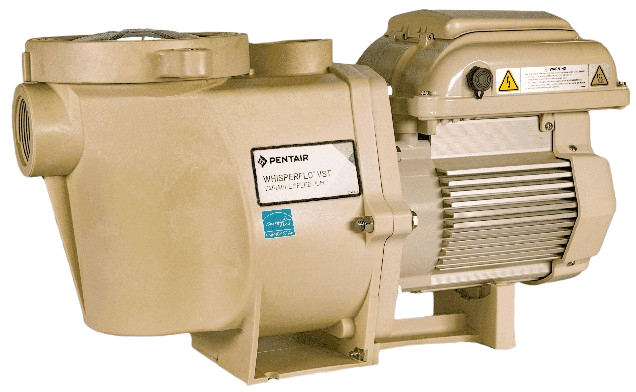
A traditional single-speed pump runs at full power every time it switches on, whether the pool needs that much flow or not. A variable speed pool pump lets you match the speed to the job, so it can run slowly for daily filtering and speed up only for cleaning or a water feature.
Because a pump’s power draw drops sharply as it slows down, a variable-speed model can reduce pool-pump energy use by 50% to 75% compared with a single-speed pump. Running longer at a lower speed also allows slower, more effective filtration, helping keep water circulating through the filter for more of the day.
Why the filter matters too
A pump only saves as much as the rest of the system allows. A high-capacity, low-resistance filter needs less pressure to push water through, so the pump can sit at a low-energy setting for longer. Pairing the filter with the pump is an easy detail to miss when you compare bids.
Where the rules are heading
State and federal rules have pushed in the same direction. Under California’s Title 20 appliance efficiency standards, replacement pool pump motors of 0.5 total horsepower or more made since July 19, 2021 have to be variable speed. Federal U.S. Department of Energy standards now require the same for pool pump motors of 1.15 total horsepower and up made since September 29, 2025, and smaller motors down to 0.5 horsepower follow on September 28, 2027.
Pool Heater Cost Comes Down to the Type of Heater
When homeowners ask about pool heater cost, the real question is usually how much energy it takes to keep the water warm month after month. That depends mostly on the type of heater.
| # | Gas heater | Heat pump |
|---|---|---|
| How it heats | Burns fuel to warm the water | Moves heat from the air into the water |
| Heating speed | Fast | More gradual |
| Energy use | Higher | Up to 80 percent less energy than gas; bill savings depend on local rates |
| Best suited to | A spa you want hot in a hurry | Keeping the pool warm through a longer season |
Why heat pumps suit the Valley
Heat pumps work best in warm air, and Sacramento has plenty of it through the swim season. Some models can also cool the water on extra-hot days, which helps when a July pool starts to feel too warm to be refreshing.
Keeping the heat you already have
Pool size plays a part as well, since a small pool has less water to heat in the first place. Once the water is warm, an automatic pool cover keeps that heat in overnight, so the heater has less to make up the next morning.
Lighting and Automation Save in Smaller Ways
LED pool lighting
LED pool lights can use up to 90 percent less energy than older incandescent pool lights. They also last much longer, which means fewer bulb replacements, and many models offer multiple colors and lighting effects that can change the look of the yard at night.
Automation and peak hours
Automation is where those savings become easy to keep. With a Pentair control system, you can schedule the pump and heater from your phone, so the equipment runs only when it needs to.
Scheduling matters in Sacramento, because SMUD’s time-of-day rate makes electricity most expensive from 5 to 8 p.m. on weekdays, and in summer weekday afternoons from noon cost more as well. Setting the pump to do its daily run overnight and in the morning is one of the simplest ways to lower pool running costs without changing anything else.
If your home is on a different utility, the same idea applies to whatever peak window your rate plan uses.
Upgrading the Pool You Already Have
You do not need a new pool to benefit from any of this. Most efficient equipment can be added to an older pool, and the work usually follows this order:
- Start with the pump, because it runs the most hours of any piece of equipment.
- Have the plumbing and filter checked, since older pools were often sized for a single-speed pump.
- Add a heat pump or LED lighting when the timing suits you.
- Fold any remaining upgrades into a larger pool renovation if one is already planned.
A well-matched setup usually performs better than a new pump bolted onto an old layout, which is why the checking step matters.
Why Efficiency Is Built Into Every Wells Pools Design
At Wells Pools, we build energy efficiency and low maintenance into the pool package from the very first design meeting.
Being a Pentair Elite Dealer means we work with the full range of energy-efficient pool equipment, from variable speed pumps to heat pumps and automation. For homeowners, the result is equipment chosen as a system rather than piece by piece, with the pump and filter sized to work together.
That is also why the installer matters as much as the equipment, and why it pays to work with an experienced swimming pool builder who plans the whole pad from the start.
What an Energy Efficient Pool Really Saves
An energy efficient pool saves in two main ways. The biggest is electricity, since a variable speed pump and a heat pump do the same work with far less power.
The second is time. Automation and LED lighting take most of the routine tasks off your list, which leaves you more of the season to actually swim.

